2026-11-28 ·
How to Tell If You Have a Slab Leak in a Dallas Home
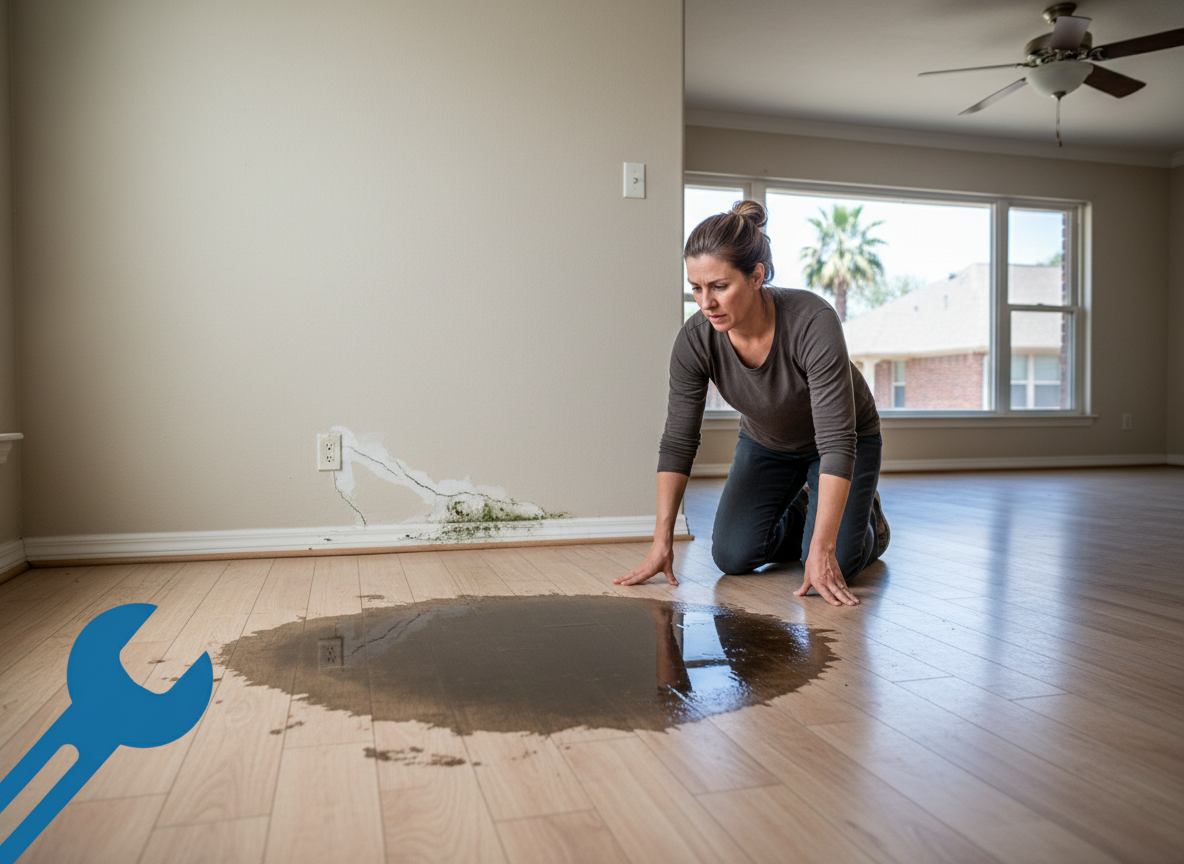
If your water bill climbs without any change in how your household uses water, a warm spot appears on the floor, or you hear running water when every fixture is off, you very likely have a slab leak. In most Dallas homes, a leak beneath the concrete foundation rarely shows up as a visible puddle. It announces itself through small, predictable changes inside the house. At our shop we often see homeowners notice two or three of these signs weeks before the damage spreads, and catching them early keeps the repair contained.
Warning Signs of a Hidden Slab Leak
The most reliable indicator is your water meter. Turn off every faucet, toilet, icemaker, and outdoor hose, then check whether the meter dial or leak indicator is still moving. If it keeps turning, water is escaping somewhere in the system. Other signs show up inside the home:
- Rising water bill with no change in household habits
- Warm spots on tile or wood floors, especially while the water heater is running
- Hairline cracks in drywall, baseboards, or grout that keep reappearing
- Running or hissing sounds near the foundation when fixtures are off
- Soft or damp carpet in one room, sometimes with a musty smell
- Weak pressure at one faucet, or hot water that takes much longer to arrive
Any single sign can have another cause, but two or more together point strongly toward a leak in the slab or in the supply line running beneath it. If you notice more than one, treat it as urgent rather than waiting to see whether it gets worse.
Why Dallas Slabs Hide Leaks
Most Dallas homes sit on concrete slabs poured over clay soil. North Texas clay expands when it absorbs rain and shrinks during long dry stretches, and that movement puts constant stress on the water lines embedded in or running beneath the concrete. A pinhole in a copper line can release water slowly for months, so the slab stays dry on the surface while the soil underneath stays saturated.
Hot water lines tend to fail more often than cold ones, which is why a warm floor is one of the most useful clues. Heat from a leaking hot line can travel up through the concrete and show as a distinct warm patch, often in a hallway or near a bathroom. Because the leak is sealed beneath the slab, the damage to framing, subflooring, and drywall can grow long before anyone sees water.
Checking the Basics Before You Call
Start with a simple shutoff test. Locate the main shutoff valve, usually near the front wall or at the water meter, and confirm that every fixture is closed. Note the meter reading, wait at least two hours without using any water, and read it again. A change confirms a leak in the system, even if you cannot see where it is.
Next, rule out the easy explanations. Look at the water heater for drips at the connections, the pressure relief valve, and the floor beneath the unit. A failing heater can mimic a slab leak, and our related guide on slab leak or water heater problem walks through how to separate the two. If the meter still turns and the water heater is dry, the leak is most likely in the supply lines, and it is time to bring in equipment that can locate it.
Avoid digging, jackhammering, or cutting into the floor yourself. Guessing where a leak sits beneath concrete often means opening the wrong section and creating more repair work.