A slab leak is a break in a water supply line that runs through or under the concrete slab your house sits on. Many Dallas homes built on slab foundations carry hot and cold supply pipe inside that concrete, so a pinhole or split can run for weeks before it shows up anywhere you would notice.
Dallas soil is the main reason slab leaks happen here. The clay under much of the city swells when it soaks up rain and shrinks as it dries out during long summers and drought years. That movement flexes the slab and stresses the pipe running through it, which is why a line that worked fine for years can start leaking with no warning.
You need slab leak repair when water is escaping under the floor instead of from a visible fixture. Common signs include a water bill that climbs with no change in how you use the house, warm or damp spots on tile or carpet, a hissing or running sound when every fixture is off, and cracks in drywall or tile that follow a line of pipe.
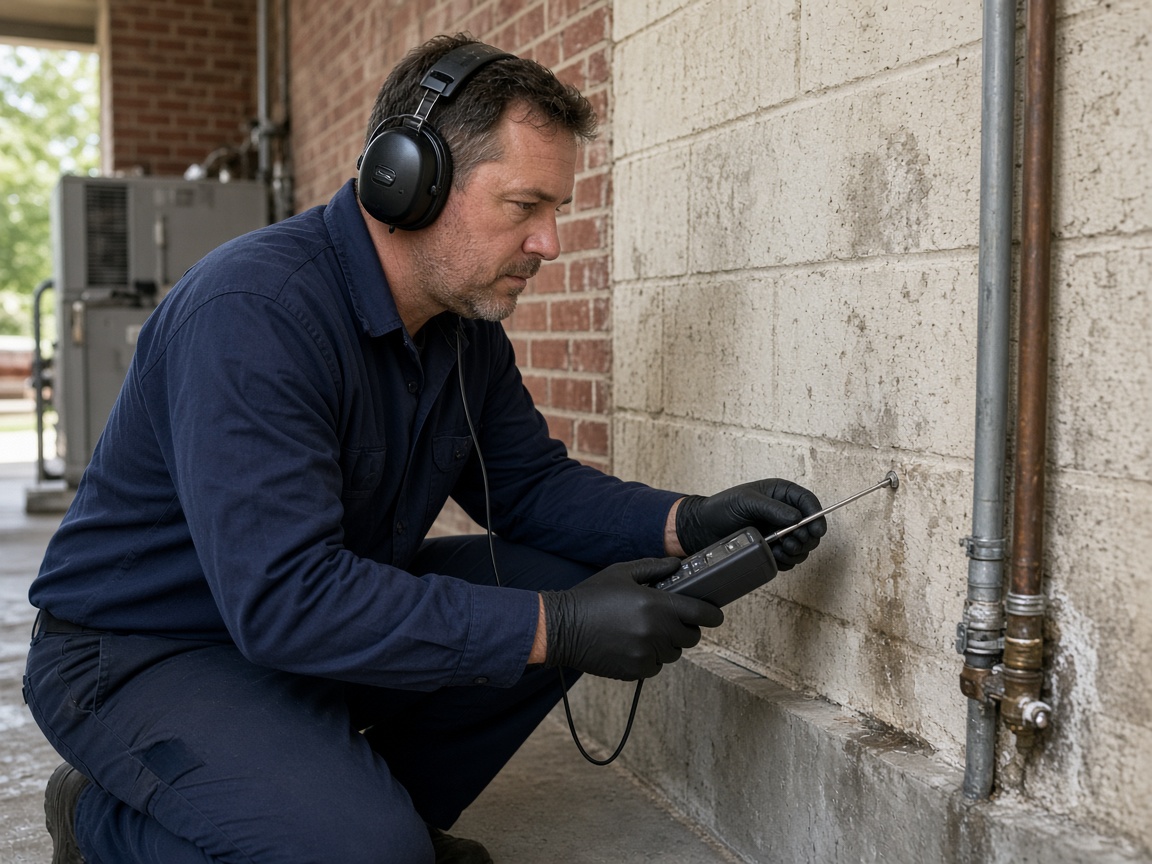
Our work starts with finding the leak, not guessing at it. We listen, check pressure, and trace the line before any concrete is opened, so the repair stays limited to the section that needs it.
Slab Leak Repair Compared With Other Leak Work
A slab leak is different from a leak at an exposed fixture or a visible joint under a sink. With a fixture leak, the water shows itself. With a slab leak, the water often has to find its way through the clay and the concrete before it surfaces, if it surfaces at all. That is why we lean on meter checks and pressure tests first, and why we do not start breaking up floors until the leak has been located. If the problem turns out to be in a drain line rather than the supply, we will tell you that plainly and point you to the right kind of work.
Protecting Your Slab Between Repairs
You cannot control the clay under your house, but you can reduce how much the soil around the foundation swings. Keep the soil next to the slab from drying out to deep cracks during long dry spells, and avoid letting it stay saturated after heavy rain. Check your water meter from time to time when no water is in use, and call us when the reading moves on its own. Catching a leak early usually means a smaller opening in the floor.
Technician insight
In Dallas, the thing that catches most people out with slab leaks is the water bill, not the floor. Homeowners often notice the meter climbing for weeks before any wet spot appears, because the water works its way through the clay and the slab instead of surfacing. If your bill jumps and nothing in the house looks wrong, check the meter with every fixture off before you assume the problem is somewhere else.
Water Leak Detection Services We Offer
✓Leak Isolation Valves
Isolation valves let us shut off one run of supply without draining the whole house. We set them during the repair so the damaged section can be closed off, then open and test each valve as the work finishes.
✓Rerouted Supply Lines
When a slab line cannot be repaired in place, we run a replacement supply route through accessible space. We test the new run at working pressure before it carries full household flow.
✓Fixture Shutoffs
Shutoffs under sinks, toilets and tubs let us isolate one fixture while we work. We check each shutoff for leaks and stiff operation during the job so it holds when you need it.
✓Pipe Connections and Fittings
Joints where new pipe meets existing supply are a common place for a repaired line to weep. We make each connection, watch it under pressure, and inspect it before any wall or floor is closed.
✓Stub-Out Connections
Stub-outs are the points where supply lines rise out of the slab to feed fixtures. If the leak has reached one, we check its condition and replace it so the repair does not leave a weak point behind.
How it works
- 1
Confirm the Leak Is Under the Slab
We shut off fixtures and watch the meter with everything off. If the meter keeps moving, the leak is in the supply system, and we work through the lines to find where it sits.
- 2
Listen and Pressure-Test
We use listening equipment along the floor and at fixture stub-outs to find where the sound is strongest. We then isolate sections of the supply and hold pressure to see which run loses it.
- 3
Trace and Mark the Line
Using the pressure readings and the sound pattern, we map the likely route of the affected pipe and mark the floor so you can see exactly where we plan to access.
- 4
Open a Limited Access Point
We cut the smallest opening that reaches the damaged section. Keeping the work close to the leak protects surrounding tile and slab as much as possible.
- 5
Repair or Reroute the Supply
Where the line is compromised, we cut out the bad section and either splice in new pipe or run a new supply route, often through accessible space rather than back through the slab. We make the new connections and test them under pressure.
- 6
Check, Close, and Walk Through
Before we patch the concrete or close any wall, we recheck the system under pressure and confirm the meter sits still. We show you the old pipe and the new pipe and explain what changed.
Pricing
The scope of detection work depends on where the leak is hiding, so we confirm the findings in writing before any repair work starts.