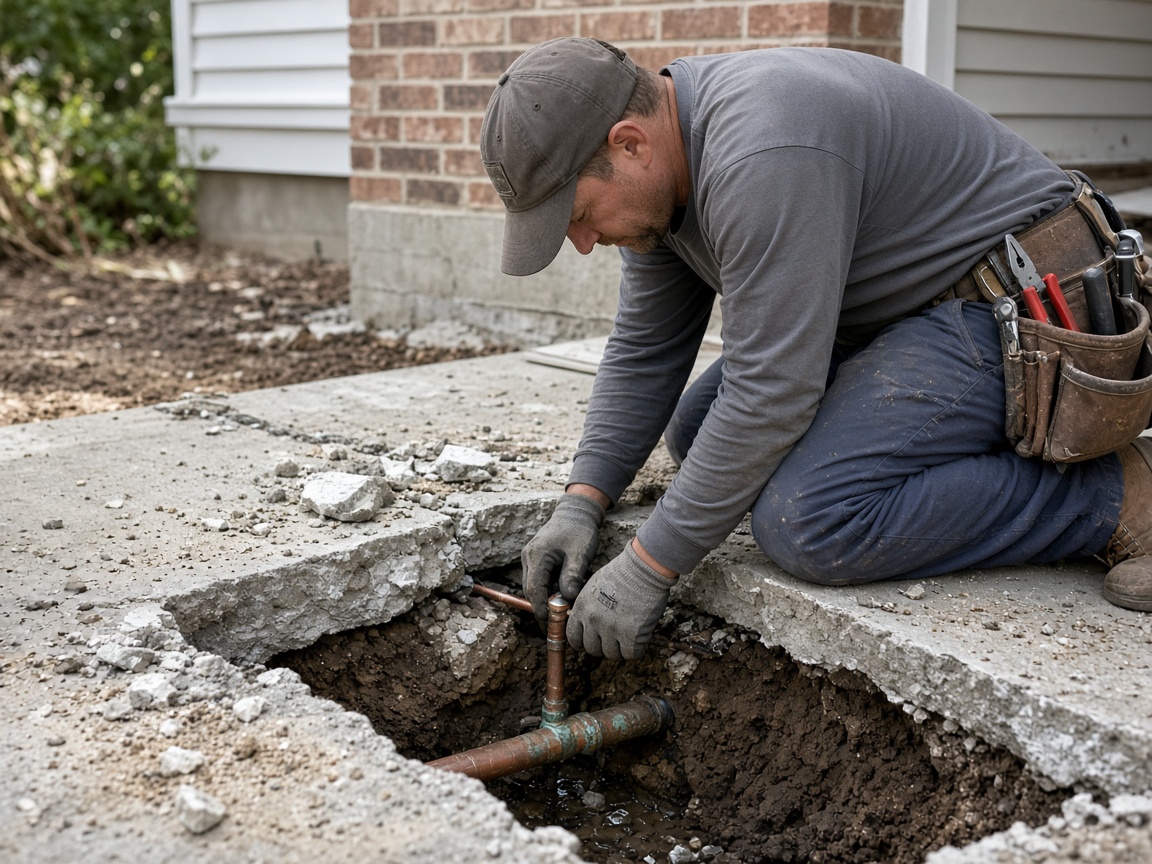
Most Dallas homes sit on a concrete slab, and the water supply runs through that slab in copper or older galvanized lines. When one of those lines develops a pinhole, a split at a fitting, or a crack from movement, the water escapes into the soil beneath the house and never shows on the surface. A slab leak can run for weeks or months before it becomes obvious, and by then the damage to the soil, the flooring, and the slab itself has often grown. Our slab leak repair service is built around finding that hidden line accurately and repairing it with the least possible disturbance to the rest of the house.
Dallas soil is the reason this problem is so common here. The expansive clay that sits under much of the city shrinks during long dry stretches and swells after heavy rain, and that movement puts stress on rigid pipe where it passes under the slab. Over time the stress finds the weakest point, often a joint or a bend near a wall. Homes built several decades ago, and homes whose lines have never been replaced, carry the most risk. If your water bill has climbed without explanation, if a floor feels warm or soft in one spot, or if you hear water running when every fixture is off, a slab leak is worth investigating promptly.
Signs That Point to a Slab Leak in Dallas
The clearest sign is a water meter that keeps moving when no water is being used. Turn off every fixture, appliance, and irrigation zone, then watch the meter's leak indicator for a few minutes. Other signs include damp or buckled flooring with no obvious source, a hot spot on tile or carpet when your water heater is running, cracks that appear in drywall or tile near a slab edge, a sudden drop in water pressure, and a musty smell at floor level. In Dallas, a damp patch that appears after a dry spell and then fades after rain is a common pattern, because soil movement can shift the pipe and change where the water surfaces.
How We Inspect and Locate the Leak
Locating the leak comes before any concrete is opened. We start by confirming that the leak is in the supply side of the system, not a drain or a fixture, by isolating sections of the house and watching the meter and the pressure gauge. Next we listen. A leak under a slab often makes a faint hiss or a rushing sound that a trained ear can follow across the floor, and we use listening equipment to narrow it. Where the sound is unclear, we run a pressure test on the isolated line to see how quickly it loses pressure, which tells us whether the leak is large or small and whether it is on the hot or cold side. We also trace the route of the supply line using the building layout and the location of fixtures so that any opening is made in the right place, not at a guess. The goal is to know where the water is escaping before anyone picks up a saw.
The Repair Work, Step by Step
Once the leak is located, we protect the surrounding finished floor and set up containment so dust and water stay controlled. We make the smallest access opening that gives clean access to the damaged section. The damaged portion of the line is then cut out, and in most cases we reroute the supply through a new run above the slab or through an accessible path where the layout allows, rather than simply patching the same buried pipe. Joints are made with proper fittings and sealed according to the pipe material, and the new section is pressure tested before anything is buried or closed. Once the new run passes, we backfill and set the slab access so the surface is returned to a sound condition, and we coordinate any flooring or tile repair needed to finish the area.
What You See, and What We Check Afterwards
During the job you will see a defined work area, a clearly marked access point, and a containment setup that keeps the rest of the home usable. You will hear some cutting and possibly a short period of water shut off to specific fixtures, and we will tell you ahead of time when that happens. Afterwards we restore water, watch the meter and the new section under normal use, recheck pressure at the fixtures on that line, and confirm there is no movement at the new joints. We walk you through what was found, what was replaced, and what we recommend monitoring over the coming weeks, including the water meter reading you should expect to see stay still.
Old Parts and New Parts Walk-Through
At the end of the job we show you the removed section of old pipe alongside the new run. We point out the failure point, whether it was a pinhole, a fitting that had separated, or a split caused by movement, so you understand why the leak occurred. We then show the new supply line, the fittings used at each joint, and the valves that now let you isolate that section in the future. This walk-through is useful because it gives you a clear record of what is now under your floor and where the shutoffs are, which matters if you ever need to isolate water quickly.
Technician insight
In Dallas, the thing that catches most people out with a slab leak is assuming the wet spot on the floor sits right above the leak. Water travels along the slab and the soil, so the surface damp can be several feet from where the pipe actually failed. We confirm the location with pressure and listening before we cut, because opening the wrong spot costs the homeowner time and floor.
Slab Leak Repair Services We Offer
✓Leak Isolation Valves
Isolation valves let us shut off the affected section of supply without cutting off water to the whole house. We install or confirm them on the rerouted line so you can control that section later, and we check each valve for full closure and smooth operation before we leave.
✓Rerouted Supply Lines
When a buried section is damaged, we run a new supply route above the slab where the layout allows, instead of repairing the same buried segment. We pressure test the new run at operating pressure before it is covered or connected to fixtures.
✓Fixture Shutoff Valves
Fixture shutoffs at sinks, toilets, and water heater connections let you stop water locally during a repair or emergency. We check that each shutoff closes fully and does not seep at the stem, because a worn valve can fail when you need it most.
✓Pipe Connections and Fittings
Every joint in the repaired section is a potential leak point, so we make each connection with fittings matched to the pipe material and sealed to the manufacturer's method. We inspect each joint under pressure and again after the system is returned to normal use.
✓Main Water Shutoff Access
We confirm the location and working condition of the main shutoff so you know how to stop all water to the house if a leak recurs. During the slab job we check that the main valve turns freely and holds, since a stuck main is a common problem in older Dallas homes.
✓Slab Access Points at Wall and Floor Junctions
Where a supply line enters the slab near a wall or floor junction, we create a defined access point sized for the repair. We close and finish the opening so it is level and sound, and we note its location so future work can avoid that area.
How it works
- 1
Confirm the Leak Source
We isolate sections of the house and watch the meter and pressure readings to confirm the water is escaping from the supply side. This rules out fixtures and drains before any listening or testing begins.
- 2
Locate the Leak Under the Slab
We listen for the hiss or rush of escaping water, run pressure tests on the isolated line, and trace the supply route using the home layout. The goal is a confirmed leak location before any opening is made.
- 3
Protect and Contain the Work Area
We protect finished flooring and set up containment so dust and water stay controlled. The work area is defined before cutting begins.
- 4
Open the Smallest Practical Access
We make the least invasive opening that gives clean access to the damaged section, placed where the leak was confirmed rather than where it was guessed.
- 5
Repair or Reroute the Line
We remove the damaged segment and install a new run, often rerouted above the slab, with fittings suited to the pipe material. Each joint is sealed according to its method.
- 6
Pressure Test Before Closing
The new section is pressure tested before backfill or cover. Any joint that does not hold is corrected before the work moves on.
Pricing
We provide a written scope of work before any slab is opened, so you know exactly what we will do, what we will open, and what will be restored before we begin.