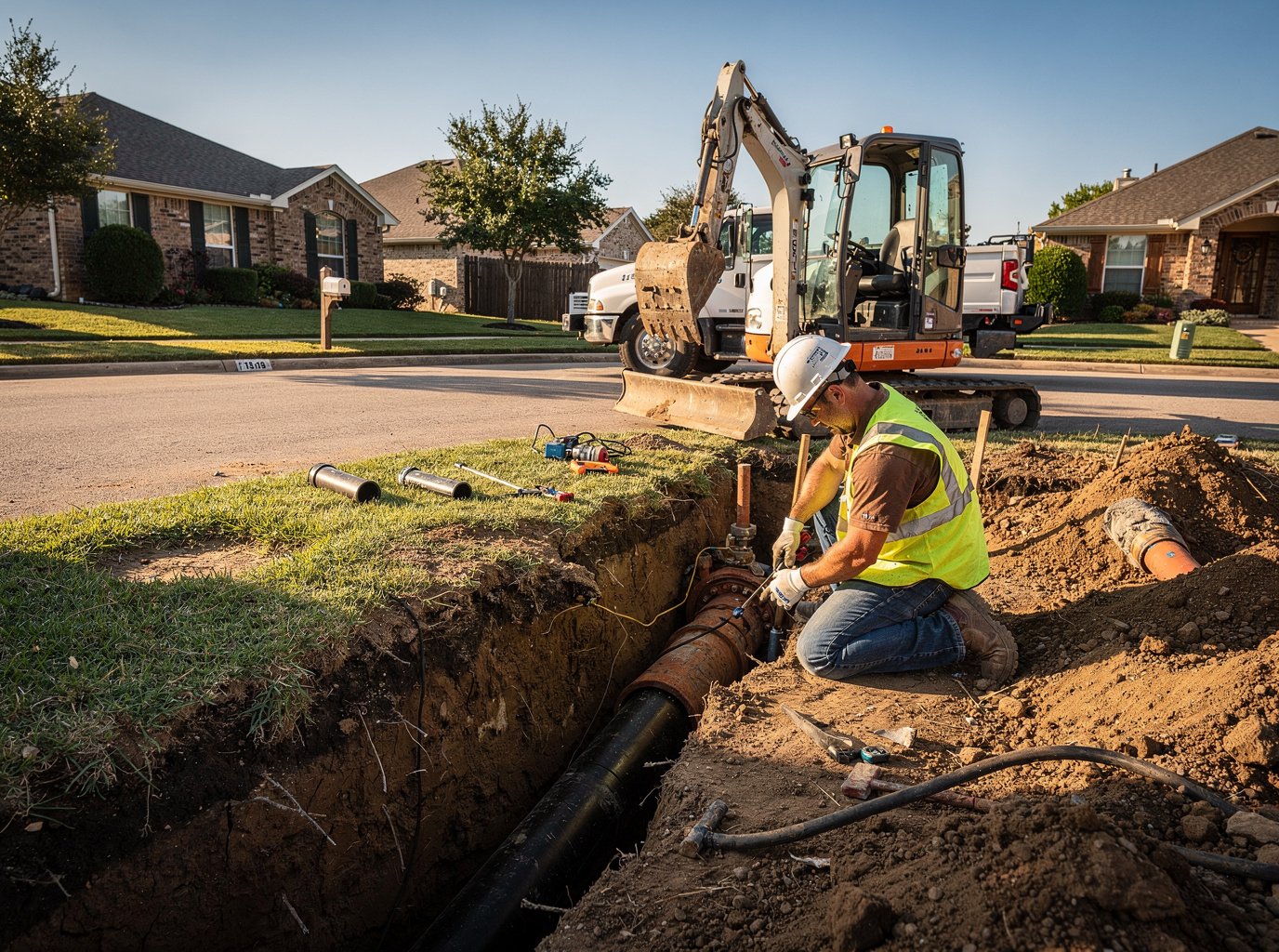
Irving sits in the western part of Dallas County, bordered by Dallas, Grand Prairie, Coppell and Las Colinas, and much of its housing was built on concrete slab foundations. When a pipe under that slab starts leaking, the water often shows up first as a warm spot in the carpet, a rising water bill or a soft patch in the yard long before anyone sees a puddle. Our slab leak repair and slab leak detection and repair work in Irving starts with finding the leak where it actually is, not guessing from the surface.
Blackland Prairie clay under much of Irving shrinks when dry and swells when it soaks up rain, and that movement pushes on the slab and the copper or PEX lines running through it. Our water leak detection process uses listening equipment, pressure testing and thermal imaging where it helps, so we can narrow the location before we cut anything. We explain what we found, show you the damaged section, and only open the slab where the evidence points.
Sewer line repair, emergency plumbing and water heater repair are the other jobs we take on most often in Irving, and many of them are connected to the same soil and foundation conditions. A cracked sewer lateral can cause a slab to settle, and a failing water heater can flood a garage or utility closet that sits on the same slab. Whichever service you need, we inspect the work before we close it up and walk you through the old parts and the new parts after every job.
Every job ends with a walk-through. We show you the failed fitting or pipe section we removed, the new materials we installed, where they sit, and how the repair was tested. You can ask questions at that point and see the work for yourself before we leave.
Around Irving
We regularly work near:
- 📍Lake Carolyn
- 📍Mustang Park
- 📍Las Colinas
- 📍MacArthur Boulevard
- 📍Irving Convention Center at Las Colinas
Slab Leak Repair Dallas in Irving — Local Notes
- •Many Irving homes from the 1960s through the 1980s were built on slab-on-grade foundations with copper supply lines run through or under the concrete. Those older copper runs can pinhole over decades, and the leak may only show up as moisture under flooring or a rising meter reading.
- •Newer subdivisions in the Las Colinas area and other parts of Irving often use PEX lines routed through the slab or through attic and wall chases. Repairs there usually mean working with a different set of fittings and manifold layouts, so we check the routing before we decide how to access the leak.
- •Irving's clay soils move with seasonal wet and dry cycles, which puts stress on slab corners, door thresholds and the points where drain and supply lines exit the foundation. Homeowners often notice cracks at those points first, so we check them whenever we are onsite for a slab leak.
- •Irving lots vary in access. Some homes have garages or utility rooms directly over the slab with water heaters that leak into the foundation, while others have sewer cleanouts in side yards or behind fences. Our equipment and access planning account for those differences so the crew can reach the problem without unnecessary demolition.
- •Trinity River drainage and seasonal heavy rain can saturate yards in parts of the city and push groundwater toward foundations. That moisture can hide a slow leak or make a sewer problem look like a slab problem, which is one reason we confirm the source before recommending any repair.