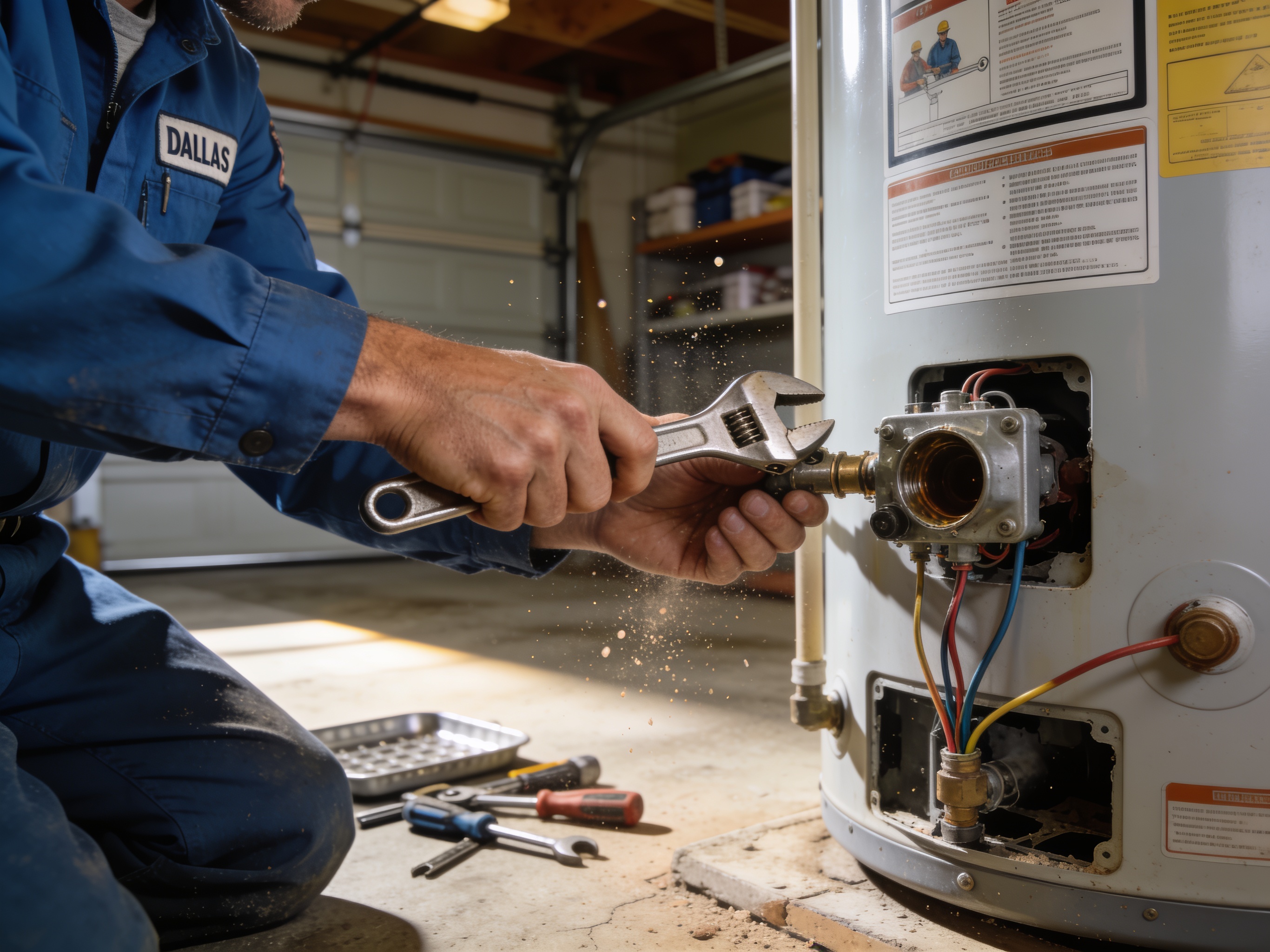
A slab leak is a break in a water supply line that runs through or under the concrete foundation of your home. Because the pipe is buried in concrete, you often can't see the leak, and the first sign is usually a higher water bill, a warm spot on the floor, or a soft patch in the carpet. Our slab leak repair work starts with finding exactly where the water is escaping so we can fix the one section that failed instead of tearing up more of the floor than necessary.
Dallas homes sit on expansive clay soils that swell after heavy rain and shrink during long dry spells. That movement puts stress on copper and PEX supply lines running through the slab, especially where they pass under load-bearing walls or near older drain penetrations. Many of the slab leaks we see in neighborhoods across 75243 and nearby parts of Northeast Dallas trace back to a pinhole or fitting that has worn down over years of soil movement, not to a single dramatic event.
A homeowner usually needs slab leak repair when a water meter keeps moving with every fixture closed, when a floor feels damp or warm in one spot, when the water pressure drops without explanation, or when the foundation area sounds like running water at night. Any of these signs means the water is leaving the system somewhere it shouldn't, and waiting tends to make the damage to flooring, subfloor and slab edges more expensive to address.
Signs That Point to a Slab Leak
The clearest signs we look for are a water meter that moves when every faucet and appliance is off, a warm or damp area on a tile or wood floor that has no obvious source, a hissing or running sound under the house that you can hear at a quiet hour, and cracks or lifting in tile or flooring that wasn't there before. Hot water leaks often show up as warm floor spots because the hot line is the one losing heat into the slab. Cold water leaks can cause a damp smell or a soft, spongy area in carpet before anything shows at the surface.
Some homeowners notice that one bathroom or kitchen loses pressure while the rest of the house is fine. That pattern points us toward a specific branch of the supply line, and it helps narrow the search before we open anything.
How We Inspect and Locate the Leak
Before we break concrete, we want to know where the water is going. We start by shutting off fixtures and reading the water meter to confirm that water is moving when nothing should be drawing from the system. We then isolate sections of the supply line and run a pressure check on each branch, which tells us whether the loss is in the main run, a hot or cold branch, or a fixture connection.
Next we listen. Using a listening device placed directly on the floor and along the plumbing path, we can often hear the escaping water and narrow the location to a few feet. Thermal scanning can help show the warm footprint of a hot water leak on the surface, and we use it as one piece of the picture rather than as the answer by itself. We mark the suspected location on the floor so the homeowner can see exactly where we believe the break is before any work begins.
The Repair Work, Step by Step
Once the leak is located, we explain the options. In many cases we can make a small, targeted access opening over the break and repair the damaged section in place. When the damaged line is too far gone or the route is poorly located, we may reroute the supply through the attic or a wall chase, which avoids new breaks in the concrete. We discuss which approach fits your home before we start, including what access will look like and how long the affected area will be out of use.
During the repair, we cut out the failed section of pipe, install new supply line with proper fittings, and make sure every connection is square and fully seated. We keep the work area contained, protect nearby flooring, and keep the water off to the affected branch until the new section is in place.
What You'll See During and After the Job
You will see a small, clearly marked opening in the floor or wall, a neat section of removed pipe that we can show you, and new supply line running in its place. We do not leave the site with open trenches or loose debris. Before we close anything, we restore water to the system slowly and look at every joint for seepage.
Afterward, we pressure-test the repaired section and then the full system to confirm that the pressure holds and the meter stays still with all fixtures closed. We also check that the water temperature is steady at each fixture and that the repaired area is dry. If the repair included concrete, we tell you what to expect for the patch and what to watch for over the next few weeks.
Old Parts and New Parts Side by Side
At the end of the job, we walk through the removed section with you. Usually that means a length of copper or older galvanized pipe with a pinhole, a split, or a corroded fitting where the water escaped. We point out where the wall thickness has thinned or where mineral buildup shows the leak had been developing for some time. Next to it we lay the new section, which is typically PEX or new copper with fresh fittings. We explain why we chose that material for your line, how it handles the soil movement common in Dallas, and what the new connections look like. The goal is for you to see exactly what failed and what replaced it, before we leave the house.
Technician insight
In Dallas, the thing that catches most people out with slab leaks is assuming a damp floor means a slow leak that can wait. The clay soils here swell and shrink with the weather, and that movement can keep stressing the same fitting until it finally lets go, sometimes after a long dry spell. If your meter moves with everything off or a floor stays warm in one spot, get it looked at while the damage is still contained to the line and not the flooring above it.
Warm Floor Spot in a Lake Highlands Kitchen
The homeowner noticed a warm patch on the kitchen tile near the island and a water meter that kept moving overnight. We shut the fixtures off, confirmed the meter was still moving, and pressure-tested the hot branch, which pointed to the line feeding the dishwasher area. Listening equipment and a thermal scan narrowed the break to a few feet under the slab, and we rerouted the supply through an accessible wall chase instead of opening a large section of tile. After pressure-testing the new route and the full system, the meter held still and the floor stayed at a normal temperature.
Water Heater Repair Services We Offer
✓Leak Isolation Valves
Leak isolation valves let us shut off a single branch of the supply line without cutting off water to the entire house. We install or use these valves during the slab leak job so the affected section can be tested and repaired while the rest of your plumbing keeps working, and we confirm each one closes fully before we open the line.
✓Rerouted Supply Lines
When the damaged run is too difficult to repair through a small opening, we route new supply line through the attic or an accessible wall chase instead. We test each new route under full pressure and check the connections at both ends before we connect it to the fixtures it serves.
✓Fixture Shutoffs
Fixture shutoffs at sinks, tubs and toilets allow us to control water flow to each point of use. During a slab leak repair we check that these shutoffs open and close smoothly, and we replace any that seep at the stem or fail to seal, so the repaired system doesn't develop a new leak at the fixture.
✓Pipe Connections and Fittings
Every joint where new pipe meets existing pipe or a fixture is a possible point of failure, especially in a slab where movement is hard to see. We make these connections with proper fittings and check each one under pressure, looking for seepage or drips before the line is covered or closed up.
✓Main Water Shutoff Valve
The main shutoff valve controls water to the whole house and is the first thing we use when a slab leak is active. We confirm that it turns fully and seals properly, and if it is seized or leaking at the packing, we tell you so it can be dealt with before a future emergency.
How it works
- 1
Confirm the Leak
We shut off fixtures and read the water meter to confirm that water is leaving the system. This tells us whether the problem is real and how much water is moving.
- 2
Isolate the Branch
We close off sections of the supply line one at a time and pressure-test each branch. This narrows the search to the hot line, the cold line, or a specific fixture connection.
- 3
Listen and Locate
We use listening equipment and, where helpful, thermal scanning to pinpoint the break. We mark the suspected spot on the floor so you can see where we believe the leak is.
- 4
Plan the Access
We decide whether to repair the line through a small opening or reroute it through the attic or a wall chase. We walk you through the access, the expected disruption and the timeline before work begins.
- 5
Repair the Line
We cut out the failed section, install new supply line with proper fittings, and seat every connection carefully. We keep the work area contained and protect nearby flooring.
- 6
Pressure-Test Before Closing
We restore water slowly, check every joint for seepage, and pressure-test the repaired section and the full system. The meter should hold still with fixtures closed before we finish.
Pricing
Every water heater job starts with a written scope that explains the location, the proposed repair route, and what we will check, so you know the plan before work starts.