2026-11-28 ·
Signs of a Hidden Water Leak in Your Dallas Home
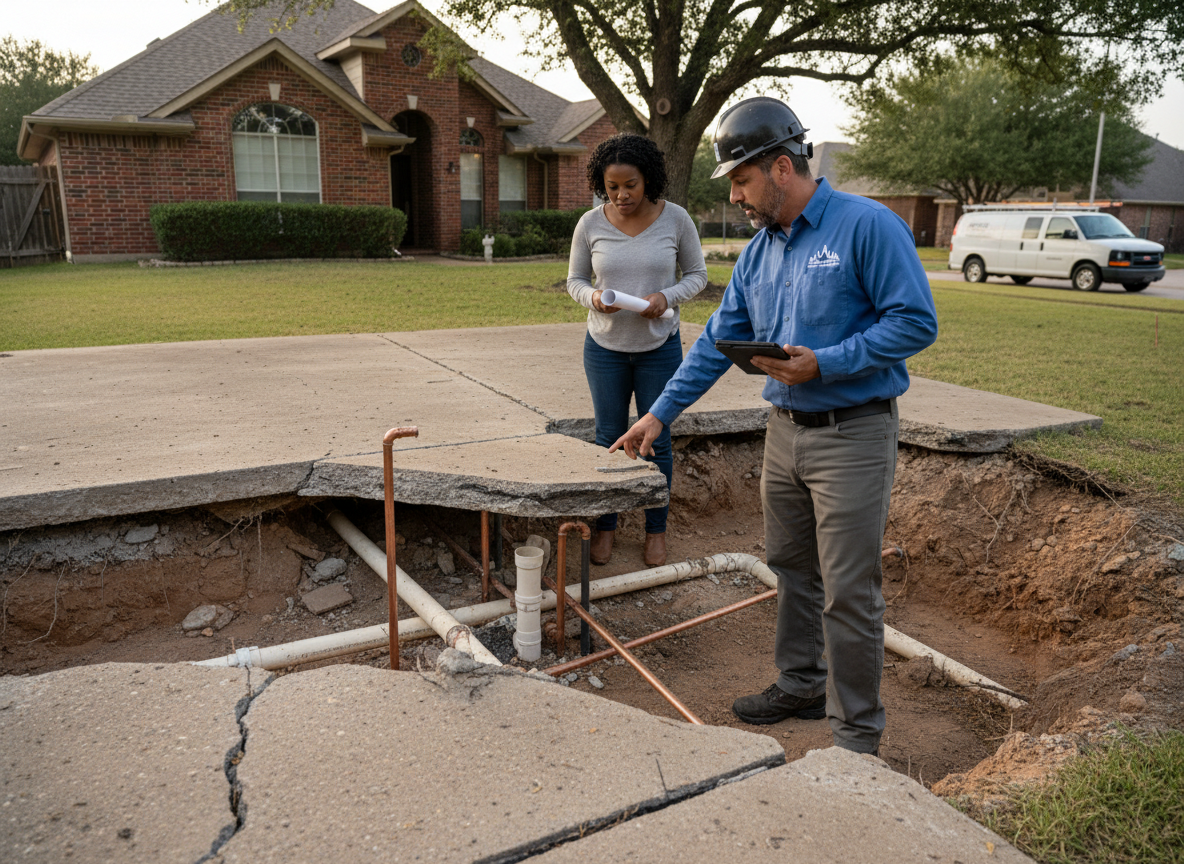
Slab leak detection and repair in Dallas follows one sequence: confirm that water is escaping from a pressurized line under the concrete, pinpoint the exact failure point with targeted testing, and then open only the smallest area needed to correct it. We start with the evidence the homeowner has already noticed, such as a rising water bill, damp carpet, or warm spots on the floor, because those clues tell us which part of the house to test first. Our goal on every visit is to find the leak accurately so the repair is as limited as possible. The steps below describe how that process unfolds on a typical Dallas slab home.
Why Dallas Slabs Hide Leaks
Most homes in Dallas sit on concrete slab foundations, and the water supply lines often run through or beneath that slab. North Texas soils are heavy clay that swells when wet and contracts when dry, and that movement puts steady stress on pipes that are locked inside concrete. Over time, a small crack or pinhole can develop at a fitting, a bend, or a weak spot in the copper. Because the line sits underground and under the house, the first sign is usually not a puddle on the surface. Instead, the water migrates through the soil and shows up as a higher meter reading, a soft patch in the flooring, or a faint hiss when the house is quiet. Understanding this pattern explains why detection matters so much before any work begins. Guessing at a location often means breaking concrete in the wrong place, which adds disruption and leaves the actual leak untouched.
How Detection Narrows the Search
Our detection process moves from broad checks to precise ones. We begin with a pressure test on the supply system to confirm whether the lines are losing water, and we check the meter with all fixtures and appliances turned off to see if it continues to move. If the loss is confirmed, we use listening equipment to trace the sound of escaping water through the slab and narrow the area. Thermal imaging can reveal cooler zones where water is pooling beneath the floor, and electronic tracing helps us follow the path of a line when the layout of the house is unclear. Each step eliminates possibilities, so by the time we mark a location, we have reasons for choosing it. Homeowners who want to understand this process in more depth can review our water leak detection service, which covers the tools and checks we use for hidden leaks in general.
Repairing the Line With Minimal Disturbance
Once the leak is located, the repair plan depends on the age of the line, the number of failures, and how the pipes are routed through the house. In some cases, a single section can be cut out and replaced with a sealed connection and a small access opening in the floor. In others, it makes more sense to reroute the supply through the attic or along an exterior wall so the damaged section under the slab is bypassed entirely. We protect finished flooring, cabinets, and baseboards during the work and cover the access area so the home stays usable while the repair is completed. After the new line is installed, we pressure test it again before closing anything up. If you are dealing with a confirmed leak under your foundation, our slab leak repair service explains how we approach that work from start to finish.
Telling a Slab Leak Apart From Other Problems
Not every warm floor or high meter reading comes from the slab. A failing water heater, a running toilet, or an irrigation valve can produce symptoms that look similar at first glance. That is why we recommend ruling out the simpler causes before assuming the foundation is involved. Our article on how to tell if you have a slab leak in a Dallas home walks through the signs that point toward the foundation, while our guide on whether a slab leak or a water heater problem is the real issue explains what to check on the heater itself. Reading those together gives you a clearer picture before a technician arrives. Our crews are glad to walk through the findings with you, and we will always explain what we tested and why, so the decision is based on evidence rather than guesswork.
Next Steps for Your Dallas Home
If you suspect a slab leak, the most useful step is to stop guessing and gather the facts. Note when your water meter moves, whether the floor is warm or damp in specific rooms, and whether the sound of running water appears when every fixture is off. Shut off the main valve if you see active water loss, and avoid digging or breaking concrete on your own, since a rushed attempt often makes the damage worse. Contact a plumbing team that tests before it cuts, and ask them to explain each finding in plain terms. Our detection process is built around that principle, so you know exactly where the problem is before any repair begins. If the situation feels urgent, our emergency plumbing page explains how we respond when water is actively damaging a home, and we are ready to help you protect your foundation and your floors.