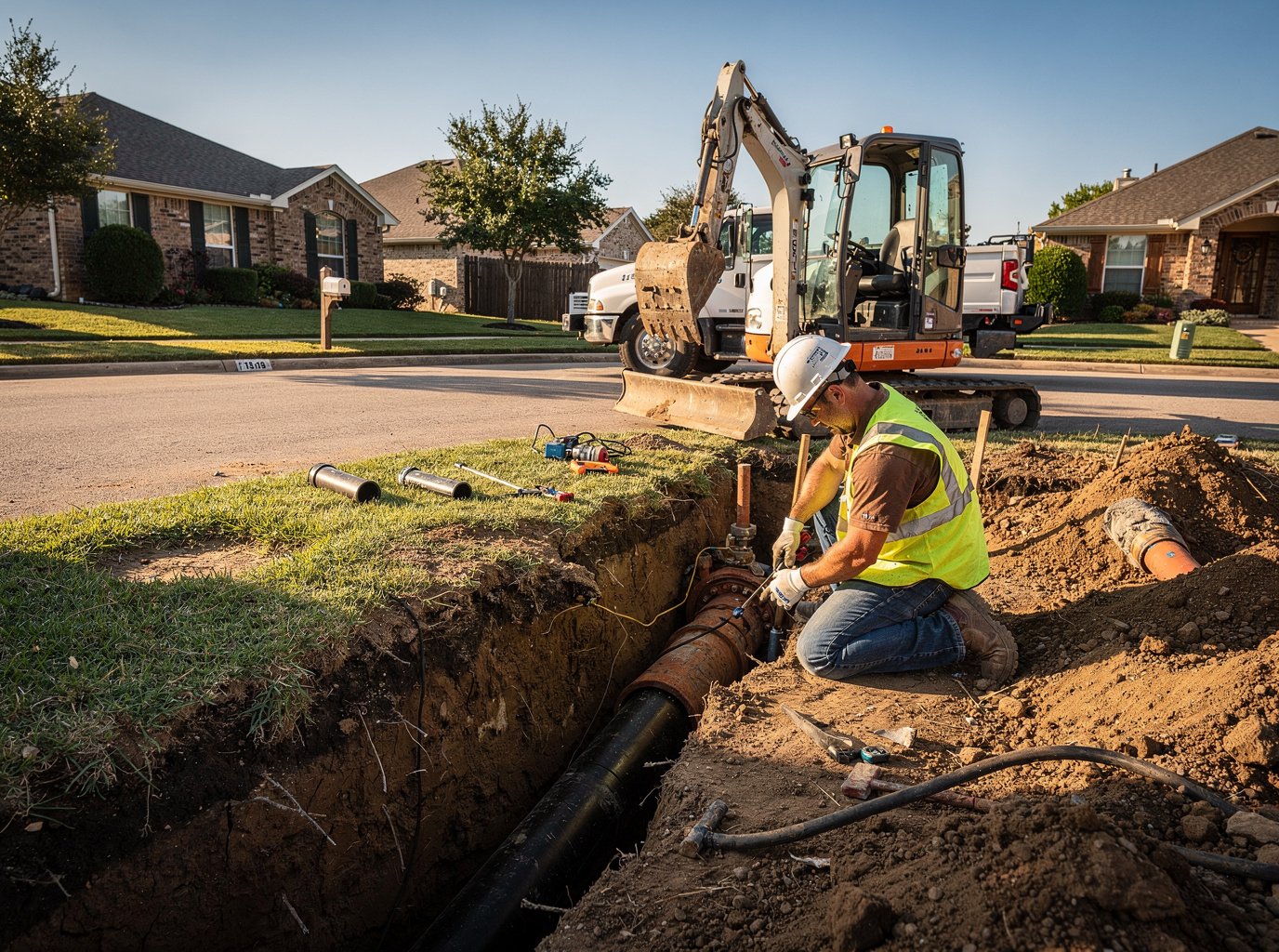
Garland sits on the east side of Dallas County, with Lake Ray Hubbard along its eastern edge and the Duck Creek watershed cutting through the city. Most of the houses we open up here were built on concrete slabs, and that foundation style is why a hidden water leak can run for months before a homeowner sees a sign of it. Our slab leak repair dallas work in Garland starts with finding the leak precisely, so we only open the concrete where it is needed.
At our shop at 12486 Abrams Rd in Dallas, we dispatch crews into Garland for slab leak detection and repair, sewer line repair, emergency plumbing, water leak detection and water heater repair. Each job starts with a walk-through of what we found and why, and we show you the old parts and the new parts once the work is done, so you can see exactly what changed.
Around Garland
We regularly work near:
- 📍Firewheel Town Center
- 📍Lake Ray Hubbard
- 📍Duck Creek
- 📍Interstate 30
Slab Leak Repair Dallas in Garland — Local Notes
- •Many Garland homes from the 1960s through the 1980s were built on post-tension or conventional slabs with copper supply lines routed through the concrete. Over decades, those lines can pinhole, and the water tends to migrate under the slab before it shows up at the surface.
- •Clay soils across Garland shrink in dry summers and swell after heavy spring rains. That movement puts stress on the slab and on any pipe embedded in it, which is one reason a leak can appear, stop, and reappear over a season.
- •Newer subdivisions on the city's west and north sides often use PEX supply lines run through the slab or through attic and wall chases. Repairs there frequently involve re-routing a section rather than opening a long trench through concrete.
- •Older lots near the historic downtown blocks sometimes have cast iron or clay sewer laterals that run under mature trees. Root intrusion at the joints is common, so sewer line repair here often means cameras first to confirm where the break is.
- •Garland's flat terrain and clay drainage mean that yard water from heavy storms can pool near slab edges and find its way into cracks, so a damp spot in the flooring can be drainage rather than a supply leak, and we check both before recommending work.